SAVED
File name .JPG
File alt. text
Image should be px wide x px tall.
Select Image
home - IBD - Extra Intestinal Manifestations - Ocular Written by Dr Sebastian Zeki

Ocular

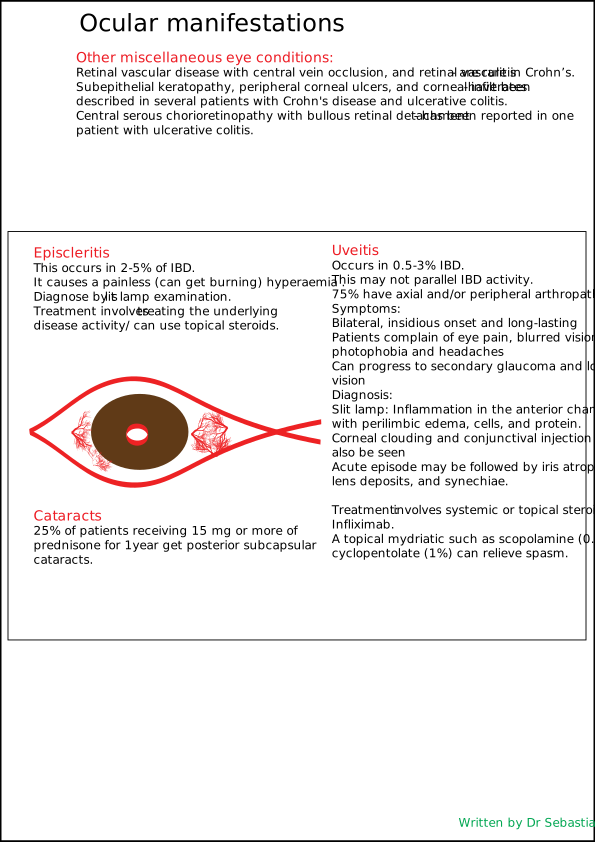
Ocular manifestations EpiscleritisThis occurs in 2-5% of IBD.It causes a painless (can get burning) hyperaemia .Diagnose by slit lamp examination.Treatment involves treating the underlying disease activity/ can use topical steroids. Uveitis Occurs in 0.5-3% IBD.This may not parallel IBD activity.75% have axial and/or peripheral arthropathy.Treatment: involves systemic or topical steroids/ Infliximab.A topical mydriatic such as scopolamine (0.25%) or cyclopentolate (1%) can relieve spasm. Cataracts 25% of patients receiving 15 mg or more of prednisone for 1year get posterior subcapsular cataracts. Other miscellaneous eye conditions:Retinal vascular disease with central vein occlusion, and retinal vasculitis- are rare in Crohn’s.Subepithelial keratopathy, peripheral corneal ulcers, and corneal infiltrates-have been described in several patients with Crohn's disease and ulcerative colitis.Central serous chorioretinopathy with bullous retinal detachment- has been reported in one patient with ulcerative colitis. Symptoms: Bilateral, insidious onset and long-lastingPatients complain of eye pain, blurred vision, photophobia and headachesCan progress to secondary glaucoma and loss of visionDiagnosis: Slit lamp: Inflammation in the anterior chamber with perilimbic edema, cells, and protein. Corneal clouding and conjunctival injection may also be seenAcute episode may be followed by iris atrophy, lens deposits, and synechiae. Written by Dr Sebastian Zeki

Related Stories

Imaging manifestations of malignancy in inflammatory bowel disease: patterns, pitfalls and pearls

FUT2 non-secretor status is not associated with disease phenotype or outcomes in patients with Crohn's disease

GLP-1 receptor agonists at the crossroads of metabolic and gut inflammation: Implications for people with type 2 diabetes and inflammatory bowel disease

The Roles of Four Neutrophil-Derived Proteins as Non-Invasive Biomarkers in the Assessment of Inflammatory Bowel Disease

The Roles of Complementary Structured Exercise and Physical Therapy in The Aging and Older Adult IBD Patient Care Team