SAVED
File name .JPG
File alt. text
Image should be px wide x px tall.
Select Image
home - Colon - Anal Diseases - Anal Pain 3 Organic Written by Dr Sebastian Zeki
Knowledge

Understands the clinical anatomy of the rectum and anus
Knows the causes of rectal bleeding and the methods of investigation
to determine the cause

Has awareness of the range of perianal conditions (which includes
abscesses and fistula), their clinical presentation and their
complications

Knows the techniques of investigation and the possible medical and
surgical treatments

Is aware of the treatment options for radiation proctitis
Skills
Take a history and appropriately examines the anus and rectum
Refers the patient for the appropriate endoscopic and radiological
investigations

Behaviours
Manages patients with anorectal disease in a sympathetic manner,
recognising and addressing the concerns caused by such conditions

Anal Pain 3 Organic

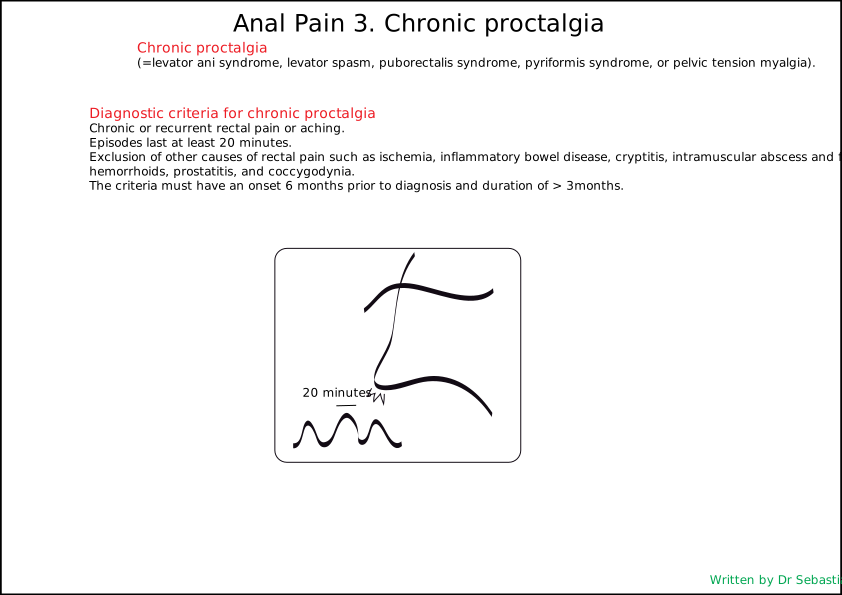
Anal Pain 3. Chronic proctalgia Chronic proctalgia (=levator ani syndrome, levator spasm, puborectalis syndrome, pyriformis syndrome, or pelvic tension myalgia). 20 minutes Diagnostic criteria for chronic proctalgia Chronic or recurrent rectal pain or aching.Episodes last at least 20 minutes.Exclusion of other causes of rectal pain such as ischemia, inflammatory bowel disease, cryptitis, intramuscular abscess and fissure, hemorrhoids, prostatitis, and coccygodynia.The criteria must have an onset 6 months prior to diagnosis and duration of > 3months. Written by Dr Sebastian Zeki

Related Stories

Fe-PNC Nanoenzyme-Enhanced Closed Bipolar Sensing Platform for Sensitive ECL/Fluorescence Detection and Imaging of miRNA-141

Electrochemiluminescence Biosensing Platform Based on CRISPR/Cas12a and DNA Nanotweezer-Mediated Catalytic Hairpin Assembly Amplification

Ophiopogonin D Alleviates Nonalcoholic Steatohepatitis via Ferroptosis Through AKT1/STAT3/HIF-1α Axis

Mapping Cell Metabolic States by Image-Enabled Gating Metabolomic Cytometry

Fluidly Confined CRISPR-Magnetic Microbots Empowered Homogeneous Electrochemical Biosensor for Amplified Detection and Discrimination of Cancer-Derived Extracellular Vesicle Subtypes